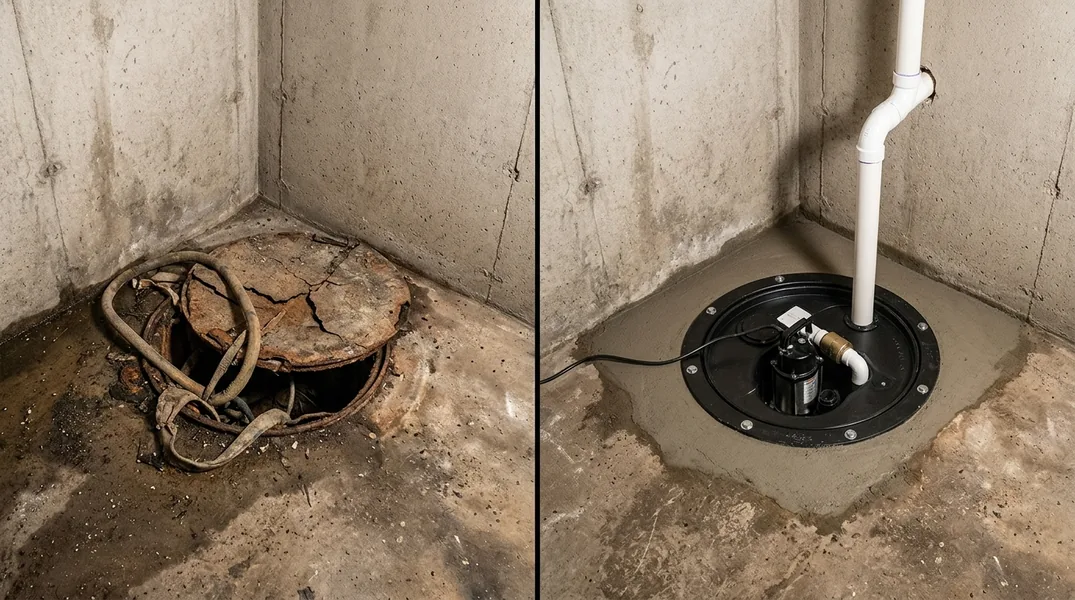
Why Spring Storms Put Your Sump Pump to the Test
Spring in Central New Jersey brings a familiar pattern: warmer days, melting snow, and heavy rainstorms that can dump inches of water in a matter of hours. For homeowners in Trenton, that combination puts enormous pressure on the foundation and the sump pump that protects it. The ground becomes saturated, the water table rises, and any water that collects around your footing has nowhere to go but toward your basement.
Your sump pump is the last line of defense in that scenario. When it works, it quietly moves water out and away before it can cause damage. When it fails, even a short power outage or a stuck float switch can lead to inches of water in your basement, ruined storage, and expensive repairs. That is why a little preventive maintenance before storm season is one of the smartest investments a homeowner can make. If you are not sure your system is ready, a professional Basement Waterproofing inspection can identify weak points before the first big rain.
Sump Pump Maintenance Checklist for Homeowners
Start with the basics. Begin by unplugging the pump and removing the lid from the sump pit. Look inside for debris, silt, or gravel that may have collected over the winter. A clogged pit can prevent the float from rising properly, which means the pump never turns on. Clean the pit and make sure the float moves freely by lifting it manually. While you are there, check the discharge pipe for obstructions and confirm that the water is directed well away from the foundation, ideally several feet from the house.
Next, test the pump by pouring a bucket of water into the pit. The float should trigger the pump, and water should flow out steadily. Listen for unusual noises, like grinding or rattling, which can indicate a worn impeller or a failing motor. If the pump runs but moves very little water, the impeller or intake screen may be clogged. It is also wise to check the backup power source. A battery backup sump pump should be tested according to the manufacturer instructions, and the battery should be replaced every few years. If you are unsure how to test your specific model, call Trenton Waterproofing at (609) 422-5457 for guidance.
The Sump Pump Check Valve: A Small Part That Prevents Big Problems
The sump pump check valve is a simple component with a critical job. It allows water to flow out of the pit but prevents it from flowing back in when the pump shuts off. Without a working check valve, water in the discharge line can drain back into the pit after every cycle, causing the pump to run repeatedly and wear out faster. In a heavy storm, a failed check valve can also allow water to siphon back into the basement, defeating the purpose of the entire system.
Check the valve by looking for visible cracks, mineral buildup, or signs of leaking around the connections. If the valve is more than a few years old or you cannot remember the last time it was replaced, it is worth installing a new one. Many homeowners in Hamilton Township and nearby areas discover during a spring storm that their check valve has silently failed. A quick inspection now can save you from that unpleasant surprise later. If you prefer to have a professional handle the inspection and replacement, schedule a free estimate with our team.
Battery Backup Sump Pumps: Your Safety Net During Spring Storms
Spring storms in Central New Jersey often arrive with thunder and lightning, and power outages are common. A standard sump pump is useless without electricity, which is exactly when you need it most. A battery backup sump pump runs on a charged battery and kicks in automatically when the primary pump loses power or cannot keep up with the water volume. For homeowners in flood-prone areas of Hightstown and Hopewell, a backup system is not a luxury; it is essential protection.
Maintaining the backup system is just as important as maintaining the primary pump. Test the battery every few months, keep the terminals clean, and replace the battery according to the manufacturer schedule, typically every three to five years. If your backup system is older or you have never tested it, now is the time. A backup pump that does not work is no better than no backup at all. Our team can inspect your entire system, including the backup, and recommend upgrades if needed. We also offer transparent pricing so you know what to expect before any work begins.
When to Call a Professional for Sump Pump Help Near Me
Some maintenance tasks are straightforward for a handy homeowner, but others require an experienced eye. If your pump is old, runs constantly, makes unusual noises, or has failed during a previous storm, it is time to call a professional. The same goes for situations where the pit fills faster than the pump can empty it, or where water is seeping into the basement even when the pump runs. These signs often point to a larger issue, such as a failing Foundation Waterproofing problem or a drainage system that needs attention.
A professional inspection can also reveal whether your discharge line is properly routed, whether your check valve is functioning, and whether your backup system is ready for the next storm. In some cases, the best solution is a more comprehensive approach, such as an Interior Drain Tile System or Exterior Basement Waterproofing, to keep water away from the foundation in the first place. If you are searching for sump pump maintenance near me in Trenton, our local team is ready to help. Call (609) 422-5457 or visit our website to schedule your free estimate and get peace of mind before the spring storms arrive.
Looking for a professional basement waterproofing contractor in Trenton? Trenton Waterproofing responds fast for all your basement waterproofing needs.
Get a Free QuoteOur services: Basement Waterproofing · Interior Drain Tile System · Exterior Basement Waterproofing