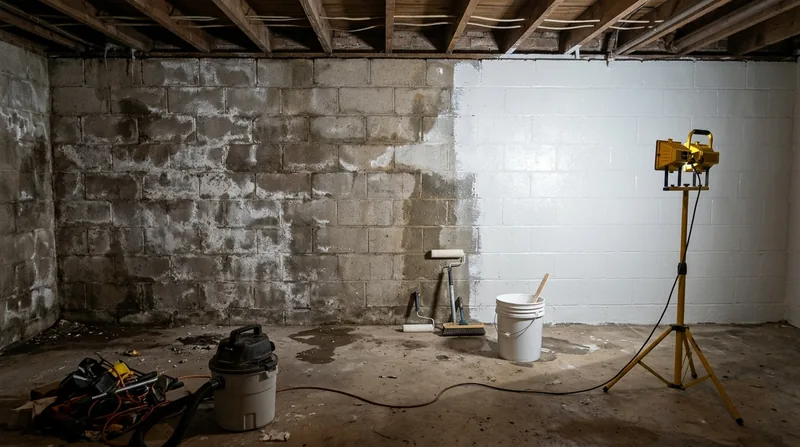




Basement Wall Sealing in Trenton: Stop the Damp Before It Spreads
If you own one of the 1880s brick rowhouses in Chambersburg or a 1940s colonial near Cadwalader Park, you already know the basement tells the story of the ground around it. Trenton sits on Piedmont clay and silt over weathered shale and diabase, and that clay holds water against your foundation walls long after a summer downpour ends. Basement Wall Sealing in Trenton is the right first step when walls sweat, efflorescence blooms white on the brick, and a musty smell hangs in the air, but the floor stays mostly dry. We prep the surface, remove the efflorescence, and apply a penetrating or membrane sealer matched to your wall type: stone, brick, early block, or poured concrete.
We are a dedicated below-grade specialist, not a general foundation firm or a plumber. If your issue is hydrostatic pressure pushing water through the cove joint, we say so plainly and walk you through basement waterproofing options instead of selling you a sealer that cannot hold back the water table.
Why Trenton Basements Take on Water the Way They Do
The building stock here is old and the ground is heavy. Mill Hill and Downtown cellars were dug by hand into stone and brick, and many still rely on original clay footing drains that have long since collapsed or silted shut. Around Hiltonia and Wilbur, the 1920s bungalows often have partly finished basements where a little seepage ruins drywall and carpet fast. The water table stays high through spring, and the Assunpink Creek and Delaware River push water into low streets during big storms. That combination is why wall seepage after rain is the dominant call we get in this city.
- Freeze-thaw cycles open hairline cracks in brick and block walls every winter, and spring melt drives water straight into them.
- Summer downpours send fast runoff from the hills toward footing drains that were never sized for today's storms.
- Clay soil traps water against the wall, so the masonry stays damp and efflorescence keeps returning.
- Old clay weeping tile at the footing clogs, and water backs up to the wall instead of draining away.
Sealing stops surface dampness and slows vapor movement, but it does not relieve hydrostatic pressure. We tell you which problem you actually have before you spend a dollar.
Key info: A 1912 brick rowhouse in Chambersburg with white efflorescence and no standing water is a good candidate for wall sealing. The same wall with water weeping at the cove joint after every storm needs an interior perimeter drain, not a sealer.
For official guidance on construction and alteration permits in the city, check the City of Trenton building department before any structural work begins.
How We Seal Basement Walls in Trenton, Step by Step
We start with a free basement inspection, because the wall tells us what the sealer can and cannot do. We check for efflorescence, map any cracks, and look at the cove joint and floor for signs of hydrostatic pressure. Then we match the product to the wall: penetrating silicate sealers for porous brick and block, cementitious membrane for rough stone, and flexible membrane where minor movement is expected. We do not seal a wet wall. Moisture has to be addressed first or the coating blisters.
- We inspect the wall, floor, and cove joint and identify the source of the moisture.
- We wire-brush and scrape the wall to remove loose mortar, paint, and efflorescence.
- We fill cracks and voids with hydraulic cement or an appropriate patching mortar.
- We apply the sealer in the correct number of coats for the wall material and porosity.
- We check the finished surface and leave you with clear guidance on grading and downspout extensions.
If the inspection shows active pressure, we point you to the right fix rather than coating over a problem.
Local example: A 1950s ranch in Villa Park had damp walls and peeling paint but no standing water. We removed the efflorescence, patched two hairline cracks, and applied a penetrating sealer. The owner also extended two downspouts, which made the biggest difference on the north wall.
If your inspection points to a wet floor or a failed drain, see our interior drain tile system page for the next step.
Wall Sealing Approaches We Use in Trenton
Not every wall takes the same product, and using the wrong one wastes money. Here is how we match the approach to the wall and the moisture problem.
| Approach | Description | Best for |
|---|---|---|
| Penetrating silicate sealer | Soaks into the masonry and reacts with free lime to block capillary pores. | Porous brick and block walls with dampness but no active flow. |
| Cementitious membrane | Rigid coating that bridges small voids and resists moderate pressure. | Rough stone and early block walls in Mill Hill and Downtown. |
| Flexible waterproof membrane | Elastomeric coating that moves with minor wall movement. | Walls with hairline cracks that reopen with freeze-thaw. |
| Crack injection plus sealer | Polyurethane or epoxy injection closes the crack, then sealer treats the wall. | Walls with a clear crack and a damp surface around it. |
Each of these is a surface treatment. If water is entering at the floor line, the fix is drainage, and we will tell you that on the inspection.
Basement Wall Sealing Cost in Trenton: What to Expect
Most residential wall sealing jobs in Trenton start around $1,500 and go up from there. The figure moves with wall length, wall material, how much prep the surface needs, and whether cracks have to be injected first. A small, clean block wall in a Hamilton Township ranch sits near the bottom of that range. A full stone cellar in Mill Hill with heavy efflorescence and several cracks lands higher, because prep takes longer and the sealer has to be matched to an irregular surface. We do not quote a number over the phone sight unseen, and you should be wary of anyone who does.
Getting two or three estimates is smart, and not just on price. Ask each contractor what they found on the wall and whether they think sealing is enough. If one says seal it and another says you need drainage, that difference matters more than the quote. Our full pricing overview lays out the ranges so you can compare apples to apples.
Basement Wall Sealing Near Me: How to Pick a Contractor Near Trenton
You will see plenty of names when you search for basement wall sealing near me, and the differences are not cosmetic. Below-grade work is its own trade, and a general handyman or a plumber is not set up for it. Here is what to check before you sign anything, whether you are in Trenton, Lawrenceville, or Princeton Junction.
- Confirm the contractor is licensed and insured, and ask for a certificate of insurance before work starts.
- Get two or three written estimates that describe the prep, the product, and the number of coats, not just a lump sum.
- Ask for local references, ideally from a home of similar age and wall type to yours.
- Ask who pulls any required permit, since structural work and drainage changes often need one and rules vary by jurisdiction.
- Check for HOA rules on exterior drainage changes if you live in a subdivision in Hamilton, Hopewell, or Robbinsville.
A contractor who answers these questions plainly is the one you want on your wall. Reach out through our
| Service | Price | Details |
|---|---|---|
| Single wall or small area sealing | Starting at $1,500 | Includes surface prep, efflorescence removal, and one sealer application on a limited wall area. |
| Full basement wall sealing | Starting at $2,400 | Covers all accessible walls with prep and two coats, priced by wall length and material. |
| Sealing with crack injection | Starting at $2,900 | Adds polyurethane or epoxy injection on active cracks before the wall is sealed. |
| Stone or early block cellar | On estimate | Irregular masonry needs extra prep and a matched membrane, so we look first. |
| Travel | Included | in Trenton and surrounding areas, no separate call-out or mileage fee |
| Estimate | Free | Response within 24h at (609) 422-5457, no obligation to book |


