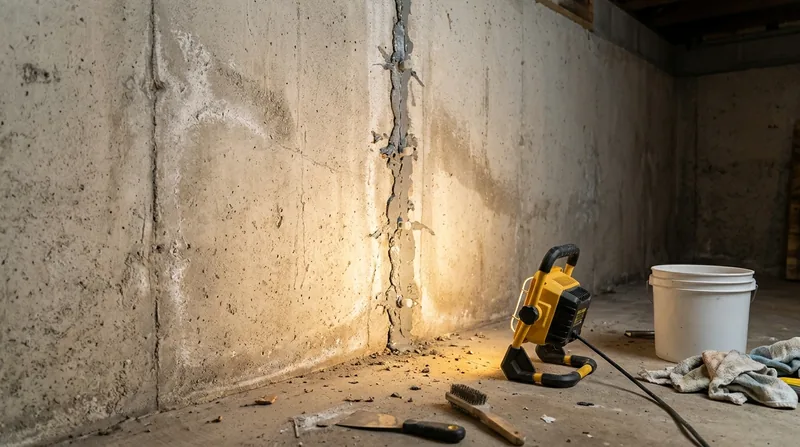




Foundation Crack Repair in Trenton
If you have a crack in your basement wall, you need Foundation Crack Repair in Trenton from a crew that understands what our ground does to a foundation. Trenton sits on Piedmont clay and silt over weathered shale and diabase. That clay swells when it soaks up spring rain and shrinks in a dry August, and it pushes and pulls on every foundation wall in the city. The 1880s brick rowhouses in Chambersburg and Mill Hill have stone and brick cellars with old clay footing drains. The 1920s bungalows near Cadwalader Park have partly finished basements and hairline cracks that open every winter freeze-thaw cycle. We inspect the crack, tell you what caused it, and match the repair to the failure, not to a sales sheet. Call (609) 422-5457 or read about basement waterproofing in Trenton to see how crack repair fits the bigger picture.
Why Foundation Cracks Open in Trenton's Clay and Old Brick Cellars
Most cracks we see in Trenton are not random. They follow the seasons and the soil. The ground here holds water, the water table stays high through spring, and the Assunpink Creek and Delaware River push water into low streets during big storms. When that water cannot drain, it builds hydrostatic pressure against the wall and finds the weakest line in the masonry. In the older rowhouses, that line is often the mortar joint or a vertical crack in a brick or stone wall. In the 1950s to 1970s splits and ranches of Villa Park and Glen Afton, it is usually a poured wall crack or a cold joint at the footing.
- Vertical cracks that run straight down a poured wall and widen at the bottom show settlement or shrinkage, not structural failure.
- Stair-step cracks through brick or block follow the mortar and often point to a footing that has moved in the clay.
- Horizontal cracks, especially with a wall that bulges inward, mean pressure has overcome the wall and need a structural repair, not just injection.
- White efflorescence powder on the wall is the salt left behind when water moves through the concrete and evaporates.
- Hairline cracks that reappear every February are the freeze-thaw cycle at work, and they need a flexible repair that moves with the wall.
We tell you plainly when a crack is cosmetic and a tube of sealant is enough, and when the real problem is water pressure that will open the next crack as soon as the first one is filled.
Key info: A vertical crack in a Mill Hill rowhouse cellar wall that is dry in July and damp in March is usually a water pressure problem, not a failing wall. We check the footing drain and the grading before we quote injection.
For the official word on permits and inspection requirements, check the City of Trenton building department before any structural work begins, because rules vary by jurisdiction and must be verified.
How We Repair a Foundation Crack in Trenton, Step by Step
We do not inject every crack we see. The first job is diagnosis. We look at the crack width, the direction, the wall material, the moisture pattern, and the grading outside. Then we choose the method that fits. A tight, non-structural poured wall crack gets epoxy or polyurethane injection. A wider or shifting crack in clay soil may need carbon fiber straps or wall anchors to hold the wall while the injection seals it. The steps below are how a typical injection job runs in a Trenton basement.
- We inspect the crack inside and out, check for efflorescence and moisture, and confirm the wall is not bowing.
- We clean the crack and drill injection ports at intervals along its length.
- We flush the crack with water or air to clear dust and loose material.
- We seal the surface with a fast-set epoxy paste so the resin stays in the crack.
- We pump epoxy or polyurethane through the ports, starting at the lowest port and working up.
- We let the resin cure, remove the ports, and grind the surface flush.
- We check the repair and advise on grading, downspout extensions, and drainage to keep water away from the wall.
If the inspection shows the crack is a symptom of water pressure rather than the cause, we say so and explain why an interior drain tile system may be the better answer than repeated injections.
Key info: In a 1920s colonial in Hiltonia, a stair-step crack in the block wall turned out to be a settled footing, not a leaking joint. We used carbon fiber straps and injection together, and the wall has stayed put through three spring thaws.
Injection Methods and Structural Options Compared
Not every crack takes the same repair. The table below shows the approaches we use in Trenton and the conditions each one fits. We choose based on crack width, wall material, movement, and whether water is actively pushing through.
| Approach | Description | Best for |
|---|---|---|
| Epoxy injection | Structural epoxy fills the crack and bonds the concrete back together. | Dry, tight, non-structural cracks in poured walls. |
| Polyurethane injection | Flexible foam resin expands and seals active leaks. | Wet, leaking cracks and cold joints that move. |
| Carbon fiber straps | Straps bond to the wall and resist inward bowing. | Bowing walls and cracks that keep widening. |
| Wall anchors | Anchors tie the wall back to stable soil outside. | Walls that have moved and need to be pulled back. |
| Surface sealing and parging | A waterproof coating over a repaired or damp wall. | Minor seepage and finished basement walls. |
Every repair we do comes with a transferable warranty, and we explain what it covers before you sign anything.
Foundation Crack Repair Cost in Trenton: What to Expect
Most single-crack injection jobs in Trenton start at $450. That covers a typical poured wall crack of a few feet, cleaned, ported, injected, and finished. The price moves up with crack length, wall material, access, and whether the crack is active. A stone or brick cellar wall in Chambersburg takes more time than a clean poured wall in a Robbinsville subdivision, and a crack behind a finished wall or a furnace takes more setup.
- Crack length and width are the biggest factors, since resin and port count both rise with length.
- Wall material matters, because brick and stone need different prep and sometimes parging.
- Active leaks and high water pressure may need polyurethane rather than epoxy, and often a drainage fix.
- Structural repairs such as carbon fiber straps or wall anchors are quoted after an on-site look.
- Access, finished walls, and stored belongings add labor time.
Get two or three estimates and ask each contractor what method they plan and why. You can see our full pricing overview for the range of work we do. If the inspection shows the crack is only one symptom of a wet basement, we will tell you that too, and price the drainage work separately so you can decide.
What to Look For in a Foundation Crack Repair Contractor Near Trenton
Hiring for crack repair near Trenton means asking a few plain questions. Is the company licensed and insured, and can they show a certificate? Do they inspect before they quote, or do they quote over the phone? Can they explain why they chose epoxy over polyurethane, or injection over drainage? A contractor who cannot answer those questions is guessing.
- Ask for proof of licensing and insurance before work starts, and keep a copy.
- Get at least two or three written estimates that name the method and the scope.
- Ask for references from jobs in Trenton or the nearby townships and call them.
- Confirm who pulls any permit, since structural foundation repair and drainage changes often need one.
- Check HOA rules in newer Hamilton and Robbinsville subdivisions before exterior work.
Reach us through our contact page or call (609) 422-5457 to set up a free basement inspection.
Foundation Crack Repair in Trenton: Pricing Guide
| Service | Price | Details |
|---|---|---|
| Single crack injection (poured wall) | Starting at $450 | Covers a typical short poured wall crack, cleaned, ported, injected, and finished flush. |
| Multiple or long cracks | Starting at $750 | Priced per crack length and port count, common in older brick and block cellars. |
| Active leak with polyurethane | Starting at $650 | Flexible resin for wet, moving cracks and cold joints where epoxy will not hold. |
| Structural repair (straps or anchors) | On estimate | Bowing or shifting walls need an on-site look before any number is given. |
| Travel | Included | In Trenton and surrounding areas, no separate call-out or mileage fee. |
| Estimate | Free | Response within 24h at (609) 422-5457, no obligation to book. |
Indicative pricing, the exact cost depends on square footage, finish, and site access. Free personalized estimate within 24h at (609) 422-5457.


