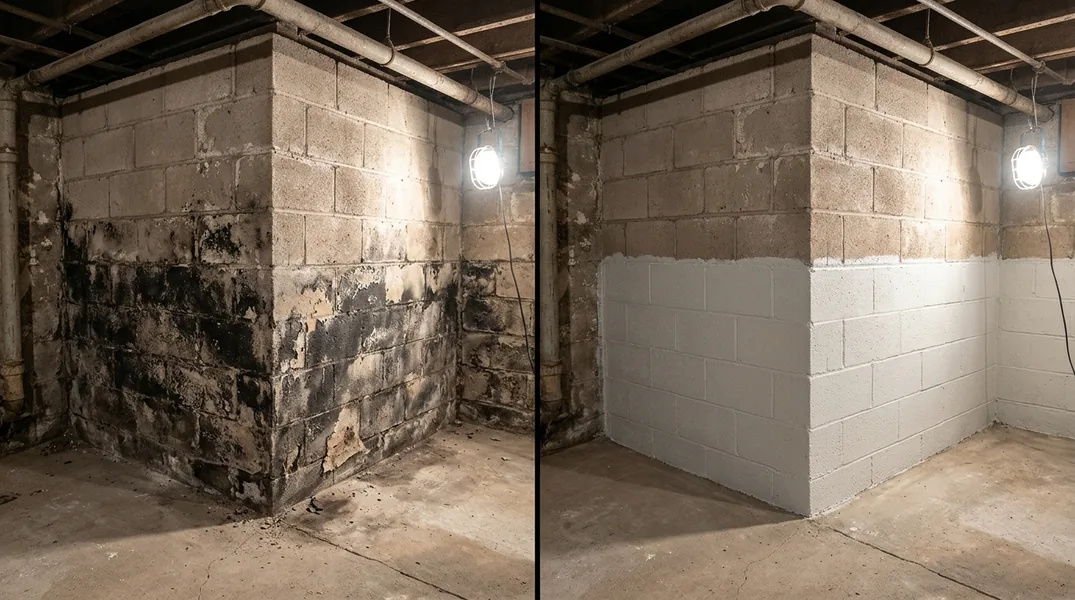
Why Trenton Homeowners Face Unique Waterproofing Challenges
If you own a home in Trenton, you already know that water in the basement is not just a nuisance. It is a threat to your foundation, your air quality, and your property value. What many homeowners do not realize is that the soil beneath their feet plays a huge role in how water behaves around the house. Much of the Trenton area sits on what geologists call Piedmont clay, a dense, heavy soil that absorbs water slowly and holds it for a long time. When it rains, that clay swells and pushes against your foundation walls, and when it dries out, it shrinks and creates gaps where water can sneak in.
This is why a one-size-fits-all approach to Basement Waterproofing rarely works here. A system that performs well in sandy coastal soil may struggle in Trenton's clay-heavy ground. Understanding the difference between interior and exterior solutions, and knowing which one suits your specific property, is the first step toward a dry basement. Whether you live near the Delaware River or farther inland toward Hamilton Township, the right answer depends on your foundation type, the slope of your yard, and how the water is currently entering your home.
Interior vs Exterior Waterproofing: The Core Differences
The interior vs exterior waterproofing debate comes down to where you stop the water. An interior system, such as an Interior Drain Tile System, is installed along the inside perimeter of your basement floor. It collects water that has already made its way through the foundation or the cove joint and channels it to a sump pump, which then discharges it away from the house. This approach does not try to keep water out of the soil; it manages the water that reaches your basement and sends it back outside. Interior systems are popular because they can be installed year-round, they do not require digging up your yard, and they come with a lower upfront pricing than exterior excavation.
Exterior Basement Waterproofing, by contrast, attacks the problem from the outside. This typically involves excavating down to the footing, applying a waterproof membrane to the exterior wall, and installing drain tile at the base to carry groundwater away before it ever touches your foundation. The goal is prevention rather than management. Exterior systems are highly effective at relieving the hydrostatic pressure that Piedmont clay creates, but they require heavy excavation, can be disruptive to landscaping, and generally cost more. The choice between drain tile vs exterior membrane is not about which is universally better; it is about which matches your home's construction and the way water is currently affecting it.
When an Interior Drain Tile System Makes Sense
For many Trenton homeowners, an interior drain tile system is the practical and budget-friendly choice. If your basement walls are structurally sound but you are seeing water seeping through the floor-wall joint, efflorescence on the block, or dampness after heavy rain, an interior system can capture that water and keep the space usable. It is also the better option when your exterior is difficult to access, for example when a deck, driveway, or mature landscaping sits right against the foundation. In neighborhoods around Hightstown, where lots can be tight and additions are common, interior installation often avoids the headaches that come with digging up the perimeter.
Interior systems also shine when the primary issue is a high water table rather than surface runoff. When groundwater rises beneath the slab, no exterior membrane will stop it from pushing up through the floor. A properly designed interior drain tile system, paired with a reliable sump pump and a battery backup, handles that rising water directly. The key is proper Foundation Waterproofing design, including a vapor barrier and correct slope, so that water moves to the sump instead of pooling under your finished flooring. A professional assessment will confirm whether your situation fits this profile.
When Exterior Basement Waterproofing Is the Better Investment
Exterior waterproofing is often the superior long-term solution when the problem originates outside the walls. If you notice bowing or cracking foundation walls, water pouring in through visible cracks, or persistent dampness that interior repairs have not solved, the pressure from saturated Piedmont clay may be too great for an interior system alone. Applying an exterior membrane and footing drain tile relieves that pressure at the source and protects the structural integrity of the foundation. This is especially important in older Trenton homes where original waterproofing has long since failed and the masonry has begun to deteriorate.
Exterior systems also make sense during new construction or major renovations, when the foundation is already exposed and excavation costs are lower. For homeowners in Hopewell and similar areas with larger lots and sloped terrain, exterior drainage can redirect groundwater before it ever reaches the house, solving the problem permanently rather than managing it indefinitely. The trade-off is cost and disruption, so it is worth getting a professional opinion before committing. A contractor who understands local soil conditions can tell you whether the extra investment will actually deliver better results for your property.
Basement Waterproofing Cost in Trenton: What to Budget
Cost is usually the deciding factor for homeowners weighing interior vs exterior waterproofing. Interior drain tile systems generally fall on the lower end of the spectrum because they involve less excavation and can be completed in a few days. Exterior systems cost more due to the digging, membrane materials, and restoration of landscaping or hardscaping afterward. However, the cheapest option is not always the most economical over time. If an interior system fails to address severe exterior pressure, you may end up paying twice. The right way to evaluate pricing is to compare the total cost of solving the problem permanently against the cost of repeated temporary fixes.
Several factors influence the final number: the length of the perimeter, the depth of the foundation, the presence of finished basement space, and whether a sump pump or battery backup is needed. Homes in Trenton with challenging access or older stone foundations may require additional labor. Rather than guessing, the smartest move is to request a free estimate from a local company that can inspect your basement, evaluate the soil and drainage, and give you a clear written scope. That way you can compare interior and exterior options side by side with real numbers instead of assumptions.
Basement Waterproofing Near Me: When to Call a Professional
If you are searching for basement waterproofing near me in the Trenton area, you are probably past the stage of minor dampness and ready for a real solution. Signs that it is time to call a professional include standing water after storms, musty odors that persist, mold growth on walls or stored items, visible cracks that are widening, and doors or windows that no longer close properly. These symptoms suggest that water pressure or moisture intrusion has reached a level where DIY sealants and dehumidifiers will not keep up. Piedmont clay makes these problems worse because it holds water against the foundation for extended periods.
A qualified contractor will do more than sell you a system. They will inspect the exterior grade, check gutters and downspouts, evaluate the footing drains, and determine whether the water is coming from surface runoff, a high water table, or both. That diagnosis is what separates a lasting repair from a temporary patch. If you are ready to stop guessing and get a clear recommendation for your home, call Trenton Waterproofing at (609) 422-5457 or request a free estimate today. A dry basement is not a luxury; it is a protectable asset, and the right system will pay for itself in peace of mind.
Looking for a professional basement waterproofing contractor in Trenton? Trenton Waterproofing responds fast for all your basement waterproofing needs.
Get a Free QuoteOur services: Basement Waterproofing · Interior Drain Tile System · Exterior Basement Waterproofing